
Cigarette Price Hikes and the Stock Market
Cigarettes are probably one of the most taxed products out there. Every time the government bumps up the price—be it through higher excise, tweaks in GST, or some new regulation—you can feel the shockwaves across the stock market.
If you’re an investor in a place like India, it pays to know how these price jumps play out for stocks. For Amit, a digital marketing student who’s into business trends, this stuff matters—a single tax change can shake up FMCG companies, healthcare, agriculture, and even government revenue streams.
Let’s break down how cigarette price hikes ripple through the economy, the markets, and individual companies.
Table of Contents
ToggleWhy Do Governments Jack Up Cigarette Prices?
Honestly, it comes down to three big reasons:
They want more tax money—tobacco’s an easy target.
They want to cut down on smoking—higher prices scare off smokers.
They’re pushing public health—fewer smokers mean less strain on hospitals.
In India, most of the price is set by GST and “compensation cess.” When taxes go up, companies just pass the extra cost to smokers.
Who’s Big in Cigarettes?
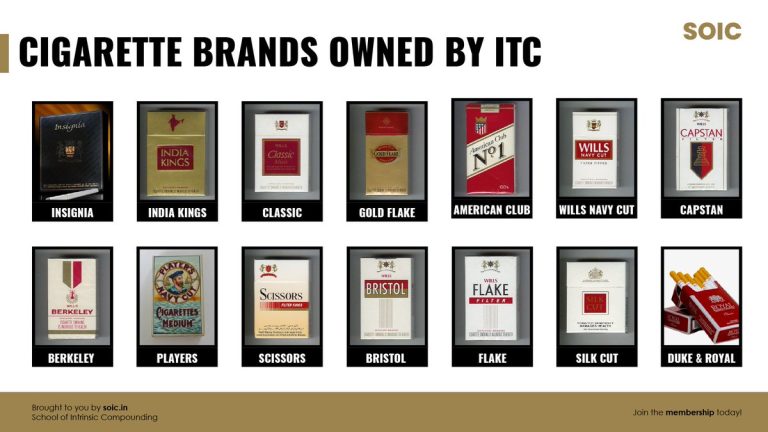
ITC Limited
ITC dominates the Indian cigarette scene. Even though it’s into FMCG, hotels, and paper, cigarettes are still its cash cow.
When prices go up:
They make more per pack.
Margins often get fatter (as long as people keep buying).
The stock usually gets a short-term boost.
But if prices go too high and people actually quit, long-term growth takes a hit.
They own brands like Four Square and Red & White. They’re more exposed to tax hikes since they haven’t diversified like ITC.
A sudden tax surge can:
Crush their sales growth.
Push smokers to cheaper brands or illegal options.
Make the stock jumpy and unpredictable.

What Happens to Cigarette Stocks When Prices Rise?
Right after a price hike announcement, here’s what usually goes down:
Short-term, stocks can pop because investors see a revenue bump coming. Traders jump in fast. Big funds start reworking their earnings estimates.
But if the tax hike looks brutal, the mood flips. Investors worry about people quitting or switching to the black market. Some bail out just to be safe.
It all depends on how “elastic” demand is. With cigarettes, people don’t cut back much even if prices climb—they’re hooked.
Addiction, Market Psychology, and Demand
Cigarettes are addictive, plain and simple. So:
Even after a price hike, people mostly keep buying.
Companies can charge more without losing a ton of sales.
They make more profit per stick.
But zoom out, and some trends are hard to ignore:
Fewer young people pick up smoking these days.
Alternative nicotine products are on the rise.
The illegal cigarette trade keeps growing.
Smart investors watch these shifts—they know they matter in the long run.
What About Government Revenue?
Higher cigarette prices mean bigger tax hauls. For example:
An excise hike fattens up government coffers.
That money gets funneled into welfare or infrastructure.
A healthier government balance sheet can lift overall market sentiment.
So even if tobacco stocks wobble, the broader market can get a boost from stronger government finances.
How Does the FMCG Sector React?
Take ITC again—they’re more than just cigarettes.
If their tobacco profits go up:
They have more cash to invest in new areas or products.
They spread out risk, which keeps investors happy.
All this can make their stock look more attractive.
Healthcare Sector—Long Game
Higher prices are meant to push people to quit. If that works over time:
Healthcare costs drop.
Insurance companies face fewer big claims.
Pharma sees demand patterns shift.
But don’t expect overnight miracles—these are slow burns.
Impact on Retail and Distribution
Retailers make a cut from cigarettes. When prices rise:
They earn more per pack, but might sell a few less.
Smaller shops feel this the most—some win, some lose.
Stocks tied to tobacco distribution can get a little wild.
Tobacco Farming and Agriculture
Thousands of farmers depend on growing tobacco.
If demand falls because prices are too high:
Farmers’ incomes can shrink.
The rural economy takes a hit.
And since India also exports tobacco, foreign exchange gets affected too.
Looking Abroad
Take Philip Morris International in the US—every year, they hike prices. Even as fewer people smoke, the company stays strong by charging more and betting on newer products like IQOS.
Or British American Tobacco in the UK—they’re dealing with tough regulations, but price increases help them make up for fewer smokers. Investors keep an eye on how well these companies adapt.
In the end, cigarette price hikes are like dropping a pebble in a pond. The ripples hit everything from company profits to government budgets, rural farmers to healthcare bills. If you’re watching these trends—whether for investing or just out of curiosity—it’s worth paying attention to every move.